State of Broadway Avenue
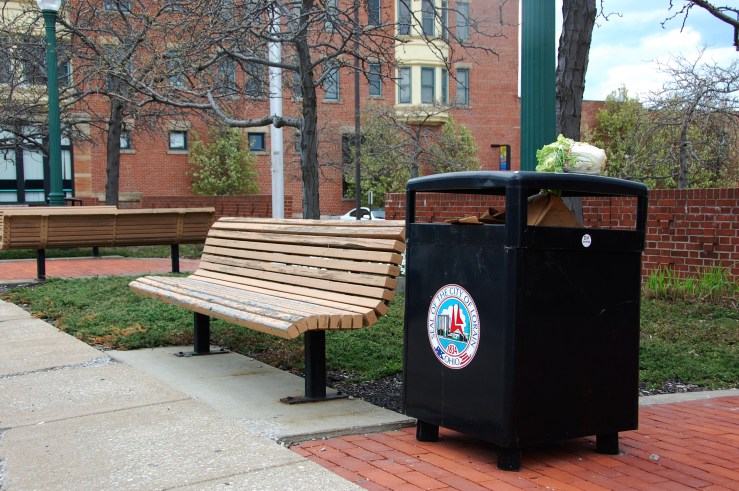
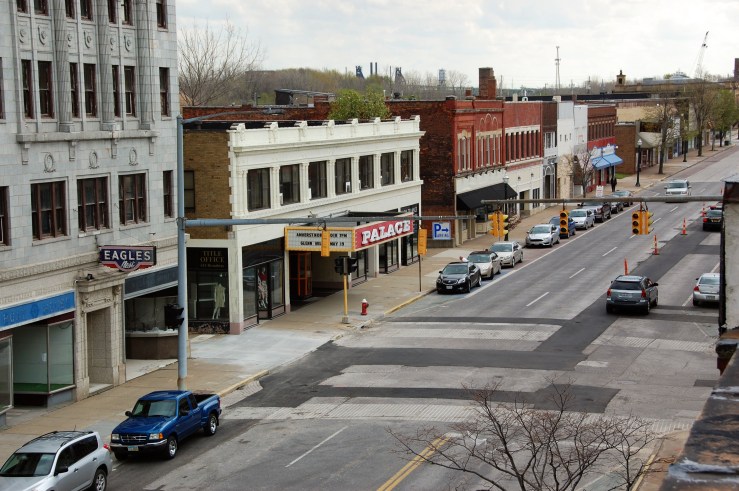
Do you remember walking down Broadway Avenue? When was the last time you were able to?
For me, it’s been since I went away to school. I used to walk Broadway a lot, especially in the summer when it wasn’t too cold to walk across the bridge. For me, I’ve never been able to see the booming age of Broadway – I was born in the 1990s, and the boom ended, from my understanding, some time around the late 1970s or early 1980s. I remember eating at the Broadway Café sometime in 2003… when I was in second grade. That was the first and last time I ate a meal near the central business district. In fact, the only other places I can think of that I ate on Broadway are the Gyro House (of course) and a Puerto Rican restaurant that ended up closing, which I only remember because it gave me food poisoning.
The distinct lack of restaurants in such a desirable location seems to only be the tip of the iceberg. Cafés, galleries, restaurants, shops, entertainment options, all gone and still disappearing after all this time. How did it get to this point? Lorainites across the board can agree that the lack of job creation in the city, lack of funding from anywhere, and a lack of common organization have created the abandoned strip of Main Street, America that is Broadway Avenue.
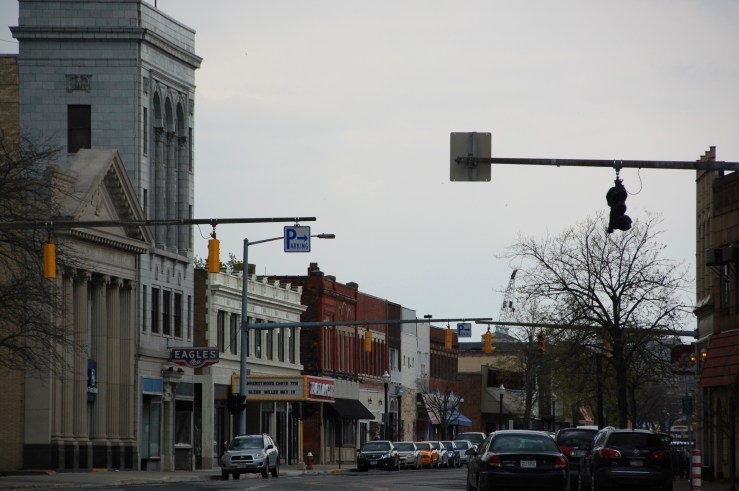
It’s not just that, though. Ask any business owner on Broadway what the political atmosphere is like in the Lorain central business district (CBD) – if you can find them. If you find a shop that is open, you are looking at a business in an area that is working against them. I was able to have a few pleasant conversations with business owners in the area and the issues were the same: the taxes are high, Broadway Avenue is constantly under construction which kills their little traffic, and the city doesn’t seem to care. The business owners talked about what their neighbors were like and their concerns. One business owner’s neighbor recently moved out because taxes were too high. Another business owner, who also owns other property nearby, mentioned they were worried that if they were to get a tenant for land near them that they would leave or would use the building for, you guessed it: storage.
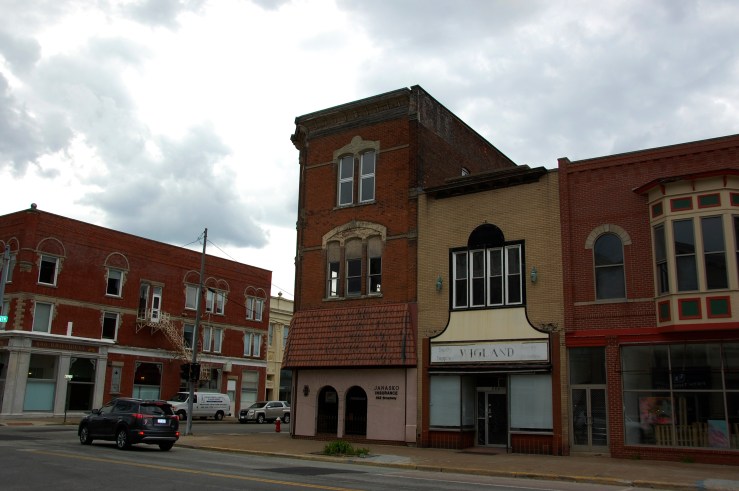
What are most of the buildings on Broadway being used for? Storage. Yes, storage. It turns out, it’s actually a lot cheaper to use a building on Broadway for storage than it is to rent a unit someplace else. These buildings, however, were not built for storage. If Broadway were to be a garage for someone to pack their things into, it would not have been created as the central business district for the entire city.
The issue with people using the buildings at storage facilities isn’t that it’s just petty, or annoying, or makes it difficult for people to move new shops in. It’s much bigger than that. When these buildings are used for storage, they’re doing an array of things that affects not only what was formerly downtown Lorain, it affects the whole city, the county, and the Cleveland metro.
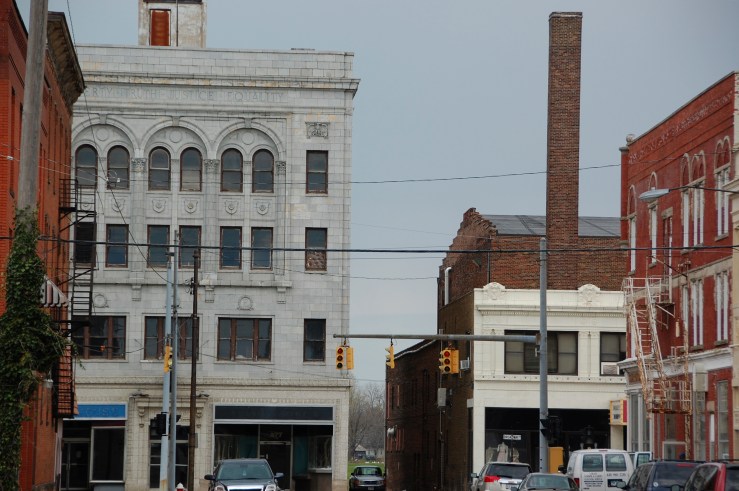
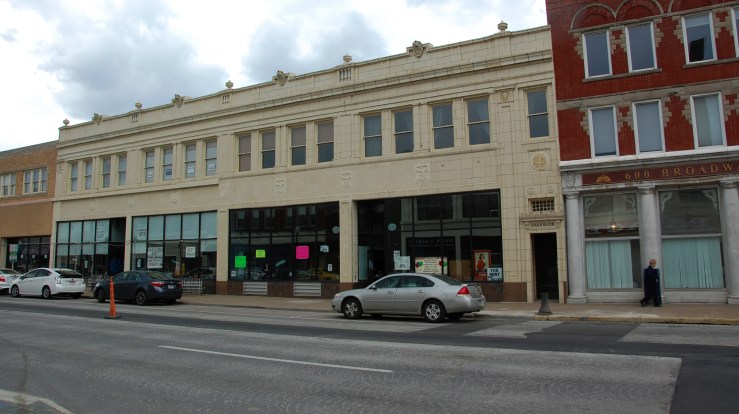
These buildings, located near the Black River Landing festival site, provide thousands upon thousands of square footage for retail space, living, you name it. Even the parking lots, the “missing teeth” of Broadway, are valuable land. Lorain is located at the midpoint between both Cleveland and Cedar Point, approximately 30 miles either direction. With huge festivals such as Rockin’ on the River, the International Festival, and Roverfest, providing commercial retail services, hotel space, and apartments on Broadway is more important now than it has been in a long time.
Lorain was arguably fortunate to miss the age of highways, with few actual interstates or even limited access roadways running through city limits. Though this has killed a lot of vehicular traffic, particularly with the constant construction or pothole-filled roads, it has opened an opportunity for Lorain to become something very, very special and unique for anything in the Midwestern United States.
With attention coming back to mass transit, specifically rail, Lorain has the infrastructure -kind of – to become a new urbanist hot spot. The infrastructure is aged and worn, but the rail line that disconnects the Lorain CBD from the rest of the downtown district provides direct access from Cleveland to Sandusky. In an ideal world, the tracks, already above the roadway, would be able to be transformed into a rapid transit station and connect with the Greater Cleveland Regional Transit Authority to provide rail access to and from Cedar Point from Cleveland, with Lorain as a stop in the middle for lunch, bars, et cetera.
We aren’t in an ideal world, but there is hope: the WestShore Corridor, a GCRTA project that would actually connect Cleveland-Sandusky, beginning with bus routes and, hopefully, moving onto rail.
State of Lorain County Transit (LCT)

What has happened to LCT?
It’s been gutted. It has lost all funding to provide its services reliably and is running on pennies. We can blame politicians and the state, et cetera, but that’s not important anymore. What is important now is that it is seriously underfunded and does not serve its original purpose as public transit anymore. Having LCT merge with the GCRTA and creating actual bus routes, complete with actual bus stops and stations, is dreaming big for Lorain. RTA is barely able to fund themselves (x), and without help from the state and federal agencies, LCT is doomed.
Providing mass transit is important for a variety of reasons:
- Provides mobility and accessibility for people that are otherwise unable to get where they need to go.
- Creates a healthier lifestyle, with transit riders statistically shown to be less obese due to the “useful walk” – it also reduces healthcare costs in addition to being cheaper than owning a car.
- Creates a walkable environment, which ties back to a healthier lifestyle in 2, but also creates a more desirable location for people to get around with ease and without having to worry about being sober to drive.
- The population base changes, with different demographics now able to explore different areas, drawing people into the city and helping to expand the economy.
However, we must keep in mind that transit works effectively only when there is a well-connected, complete street grid (such as the one in central Lorain), with a dense neighborhood, such as the Broadway Avenue corridor, providing the population.

Which brings us to the question of the chicken and the egg: do we provide transportation to Broadway and people move in, or do people have to move in first?
The answer is very complex, and depends on a whole variety of issues that must be organized. In the end, though, the answer to “How do we fix Lorain?” is that we must invest in our preexisting infrastructure, bring buildings to code, cite violations, and collect the taxes that have been neglected for years. It sounds simple, almost like people have jobs for it, but for Lorain it has been unbelievable complex and disorganized. The Lorain CBD needs to come together and organize themselves as a neighborhood, with proper boundaries and a list of changes they can and will work to achieving. As a first step, that would create a new horizon for the city of Lorain, Ohio.





 Alexander Wooledge